











































Grace Keith discovered the field of stage management when her “amazingly eccentric” high school theater director suggested it to her. That early experience as high school stage manager sparked Keith’s interest. She pursued internships and eventually connected with Broadway stage manager Cody Renard Richard.
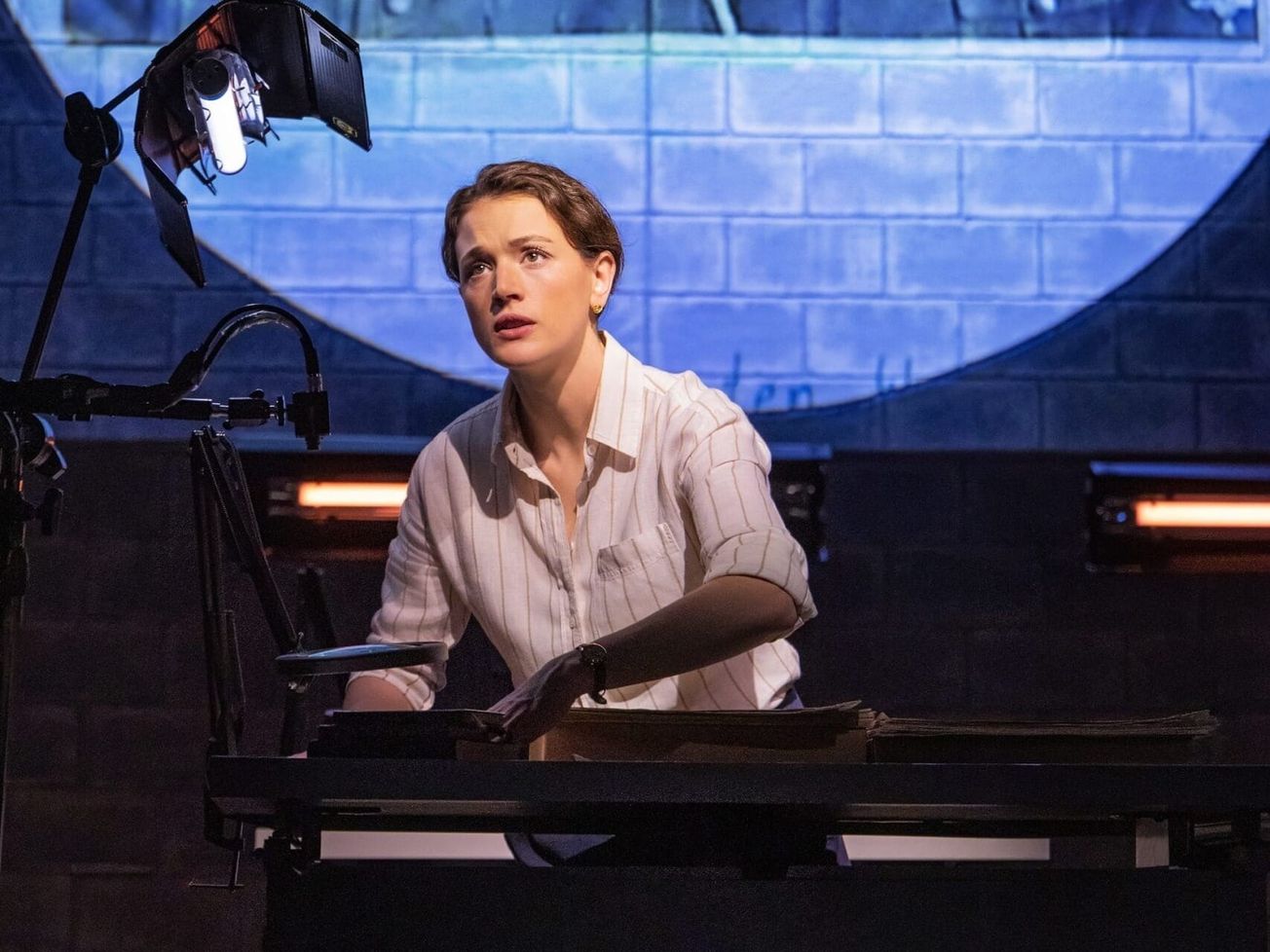
After moving to New York City, Keith worked as a production assistant at Gibney and as a stage manager for a play at Theatre for the New City. She landed her first Broadway contract as a production assistant (PA) for the summer 2025 workshop of the Broadway-bound musical “Wanted,” and became a production assistant on its Broadway mounting, which officially opened at the James Earl Jones Theatre on Nov. 8. In between, Keith PA’d for Manhattan Theatre Club on its production of “The Balusters.”
PAs are commonly known in the film and television industries, but they’ve become a more common, entry-level position in theater, as well. PAs supporting stage management have been recognized as members by Actors’ Equity Association, the union representing professional actors and stage managers, since 2023.
Keith described her role and her specific contributions to “Wanted” below.
What does a production assistant do?
Grace Keith: In my case, I was a production assistant for the stage management team. In the beginning of a new production, it really requires all hands on deck, so it’s about having extra personnel in the room to support the work. Stage managers keep the rehearsals running as smoothly as possible and document everything, so as a production assistant, I’m there to help the team do that — from making room signage to taping out the scenery [marks] and setting up hospitality. We are even responsible for sharpening every single pencil in the room. A lot of our job is supporting the assistant stage managers and production stage manager by helping with distribution of important information and [assembling] prop tracking, costume [tracking] and schedules. I like to think that production assistants are basically Broadway stage managers-in-training, so we also represent the team and use our experience to manage rooms if needed. When we move into the theater, our role continues until opening night, and our responsibilities change a great deal.